
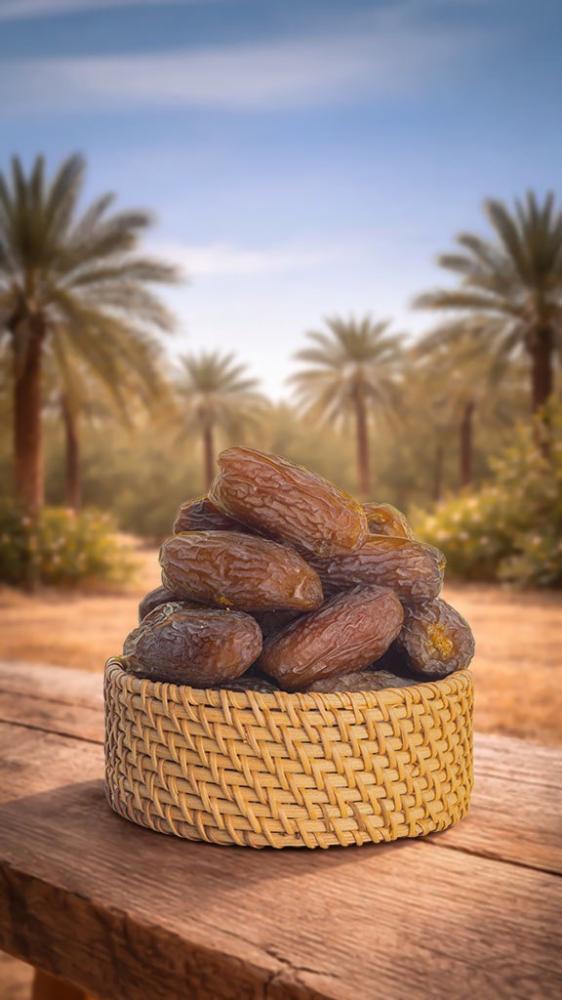
Medjool Dates: A Premium Date with Large Size and Balanced Flavor
Introduction
Medjool dates are among the most premium and well-known date varieties, distinguished by their large size, soft texture, and balanced natural sweetness. They are widely enjoyed as table dates and have gained strong popularity in Saudi Arabia and international markets for both daily consumption and hospitality.
What Are Medjool Dates?
Medjool dates are a high-quality date variety known for their noticeably larger size compared to most other dates. They feature thick flesh, a soft bite, and a naturally sweet flavor. Medjool dates are typically eaten directly without any preparation, which makes them one of the most preferred table dates.
Why Are Medjool Dates Considered Premium?
Medjool dates earned their premium status due to several key characteristics:
- Large and visually appealing size
- Soft and easy-to-chew texture
- Naturally sweet and balanced flavor
- Ideal for direct serving and hospitality
For these reasons, Medjool dates are classified primarily as table dates rather than processing dates.
Origin of the Name Medjool
The name Medjool is used to distinguish this variety from other date types. Over time, the name has become synonymous with large, high-quality, premium dates in both local and global markets.
Cultivation of Medjool Dates
Medjool date palms require careful agricultural management to ensure high-quality fruit production, including:
- Controlled irrigation
- Proper pollination
- Continuous monitoring during growth and ripening stages
Today, Medjool dates are cultivated in specialized farms across Saudi Arabia to meet consistent quality standards.
Ripening Stages of Medjool Dates
Like other date varieties, Medjool dates go through the standard ripening stages:
- Kimri
- Khalal
- Rutab
- Tamr
They are typically harvested at the Tamr stage when flavor and texture are optimal for direct consumption.
Texture and Flavor
Medjool dates are characterized by:
- Soft, non-dry texture
- Thick, fleshy body
- Medium-sized pit
- Balanced sweetness without sharpness
These qualities make them easy to enjoy without additives or preparation.
Uses of Medjool Dates
Medjool dates are commonly used in various ways, including:
- Direct consumption as table dates
- Serving in hospitality settings
- Breakfast and daily meals
- Pairing with coffee or tea
- Use in selected recipes and desserts
Medjool Dates in Saudi Arabia
Medjool dates are widely appreciated across Saudi Arabia and are considered a preferred option for premium dates. They are commonly chosen for formal occasions, gifting, and everyday consumption, and are increasingly popular in online stores.
Medjool Dates at Hadhim Dates
At Hadhim Dates, Medjool dates are carefully selected based on size, uniformity, and softness. They are presented in a way that reflects their premium quality, making them suitable for both daily use and refined hospitality.
How to Identify High-Quality Medjool Dates
High-quality Medjool dates are identified by:
- Consistently large and uniform size
- Even brown color
- Soft, non-sticky texture
- Absence of dryness or surface cracks
Storage and Handling
Medjool dates should be stored in a dry, moderately cool place inside a sealed container to maintain freshness, softness, and overall quality.
Conclusion
Medjool dates are a premium date variety that combines large size, soft texture, balanced sweetness, and ease of consumption. These qualities have made them one of the most sought-after table dates in Saudi Arabia and beyond, ideal for hospitality and everyday enjoyment.
Frequently Asked Questions
What are Medjool dates?
Medjool dates are premium, large-sized dates known for their soft texture and balanced sweetness.
Are Medjool dates considered table dates?
Yes, they are among the best varieties for direct consumption as table dates.
Where can premium Medjool dates be purchased?
They are available at specialized date stores, including Hadhim Dates.
How are Medjool dates typically consumed?
They are eaten directly or served with coffee and tea in hospitality settings.